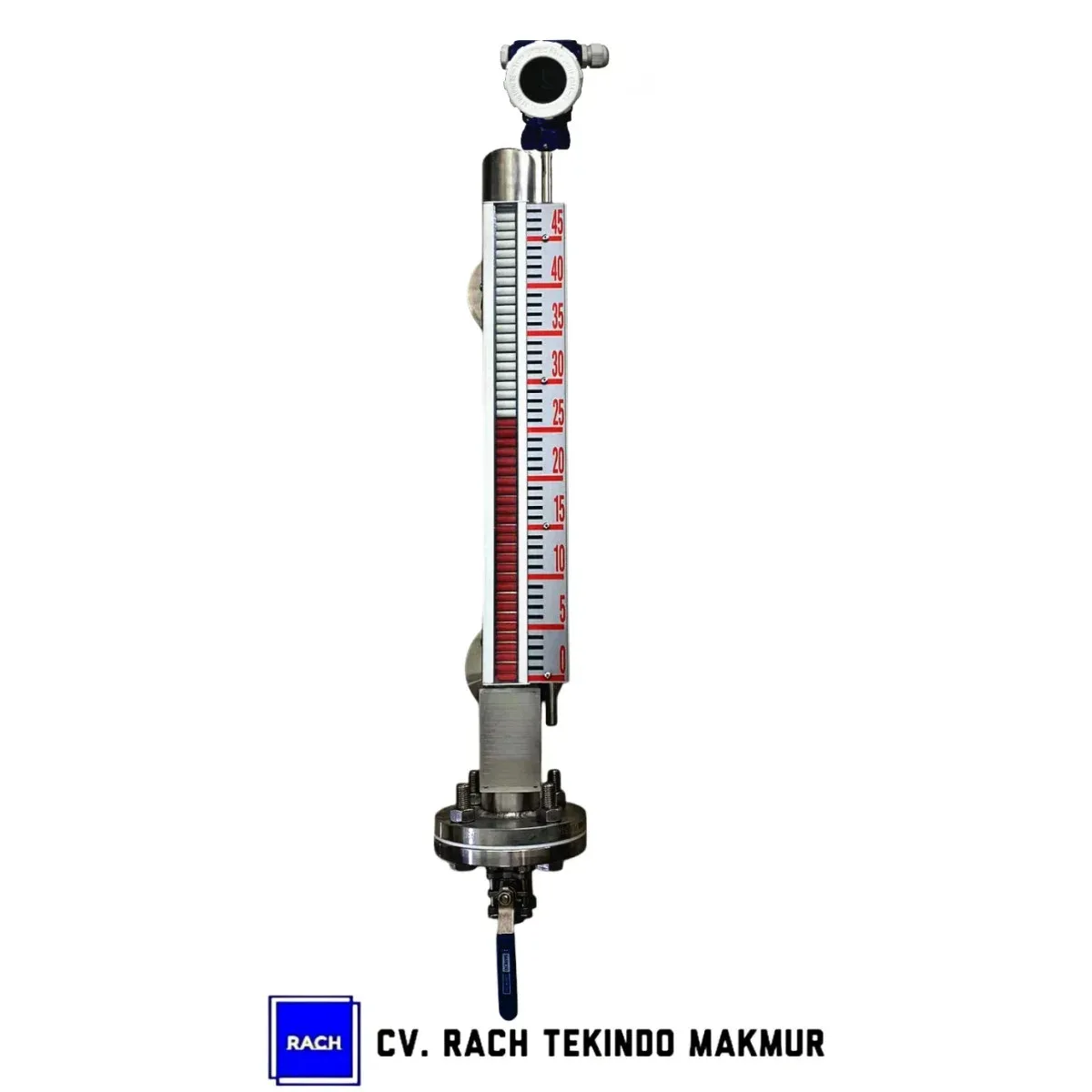
A magnetic level gauge chamber that starts leaking after six months can almost always be traced back to one decision: a material that does not suit the liquid inside it. Since the chamber and float are in constant contact with the medium, choosing the material matters as much as choosing the measuring length. The four most common options are SUS304 and SUS316 stainless steel, and UPVC and CPVC plastics, and each has its own operating window.
SUS304 is the standard choice for liquids that are not very aggressive, such as clean water, cooling water, diesel, lubricating oil and many organic solvents. It is mechanically strong, handles fairly high pressure and temperature, and costs less than SUS316. Its weakness shows with liquids containing chlorides, such as seawater, brackish water or brine. Chlorides can cause pitting corrosion, small pits that slowly work their way through the chamber wall.
SUS316 contains molybdenum, which makes it more resistant to chlorides and many dilute acids. It is widely used in food and beverage plants, pharmaceuticals, seawater treatment, marine service, and chemical plants with more corrosive media. For tanks cleaned with caustic or acid CIP solutions, SUS316 also lasts noticeably longer. For corrosive service at high pressure or temperature, SUS316 is usually the first choice.
Some liquids attack stainless steel quickly, such as hydrochloric acid, ferric chloride solution or concentrated hypochlorite. For these, a plastic chamber is the better fit. UPVC resists most inorganic acids and alkalis, is light and economical, and suits chemical dosing tanks in water treatment, acid tanks in metal plating lines and chemical waste pits. Its limit is temperature, as UPVC is generally used only for media below about 60 °C.
CPVC is a development of PVC with a higher chlorine content, which gives it better heat resistance. It can handle corrosive media above the UPVC limit, typically up to about 90 °C depending on pressure and chemical concentration. CPVC is often chosen for warm acid solutions, heated chemical tanks and processes that combine corrosion with heat. Neither UPVC nor CPVC is designed for the pressures a metal chamber can take, so both are better suited to atmospheric or low-pressure tanks.
To pick the right material, have four details ready before asking for advice: the chemical name and concentration, the minimum and maximum operating temperature, the tank pressure, and whether the tank is cleaned with other chemicals. If in doubt, check the material supplier's chemical resistance chart and look at which materials have already proven themselves in the tanks and piping of the same system. The float should also match the chamber material, because a corroded float changes weight and shifts the reading.
Do not forget the gaskets and flange material. A SUS316 chamber fitted with an ordinary rubber gasket in solvent service can leak at the joint even though the body is intact. Choose PTFE or an elastomer suited to the medium so the whole assembly has the same resistance.
CV. Rach Tekindo Makmur supplies Magnetic Level Gauge Indicators for a wide range of industrial instrumentation needs. If you need level gauges, level switches, level transmitters, or consultation on configuration and installation for your level measurement system, contact us on WhatsApp at 0877-8620-5656 to discuss your technical requirements and request a quotation tailored to your application.


.jpeg)