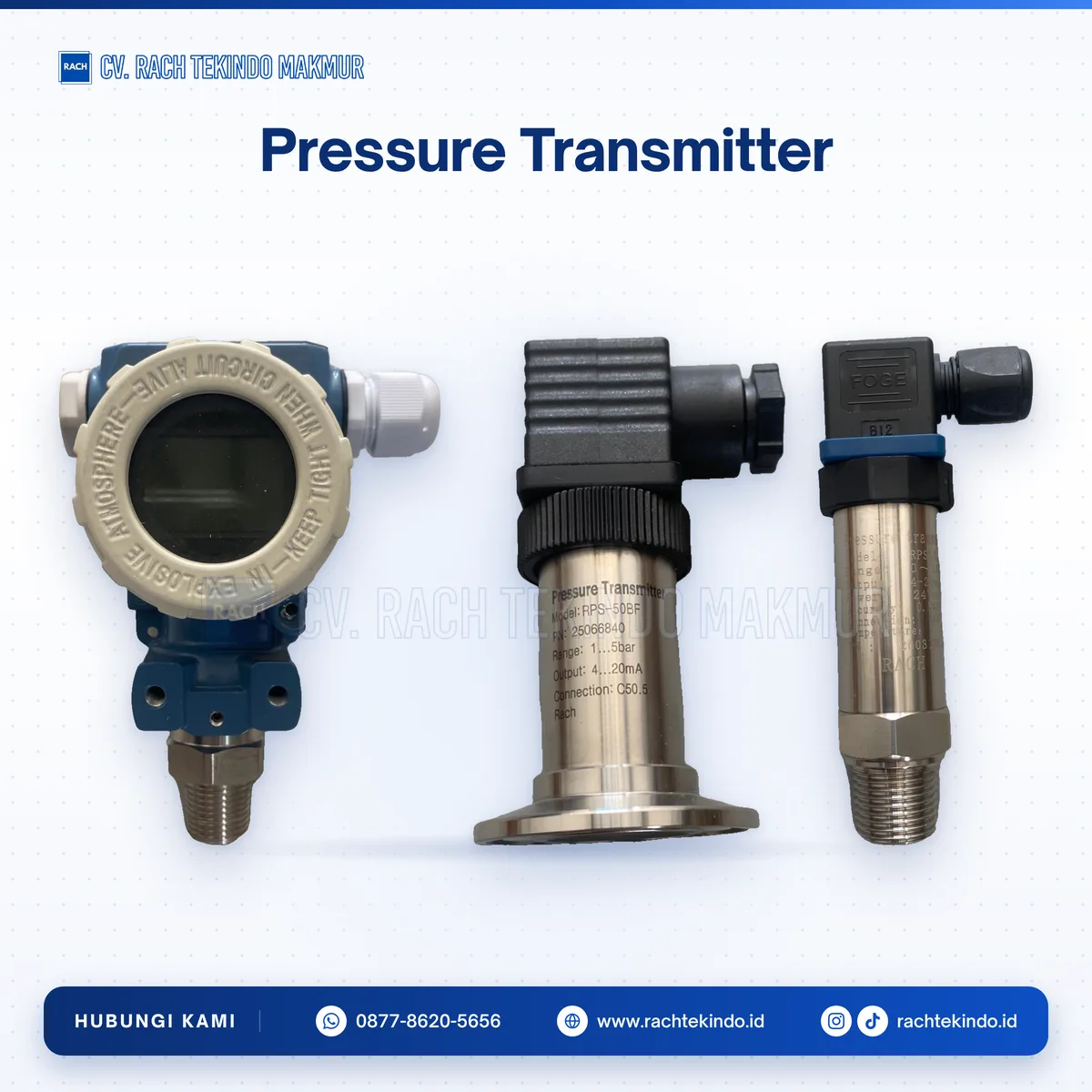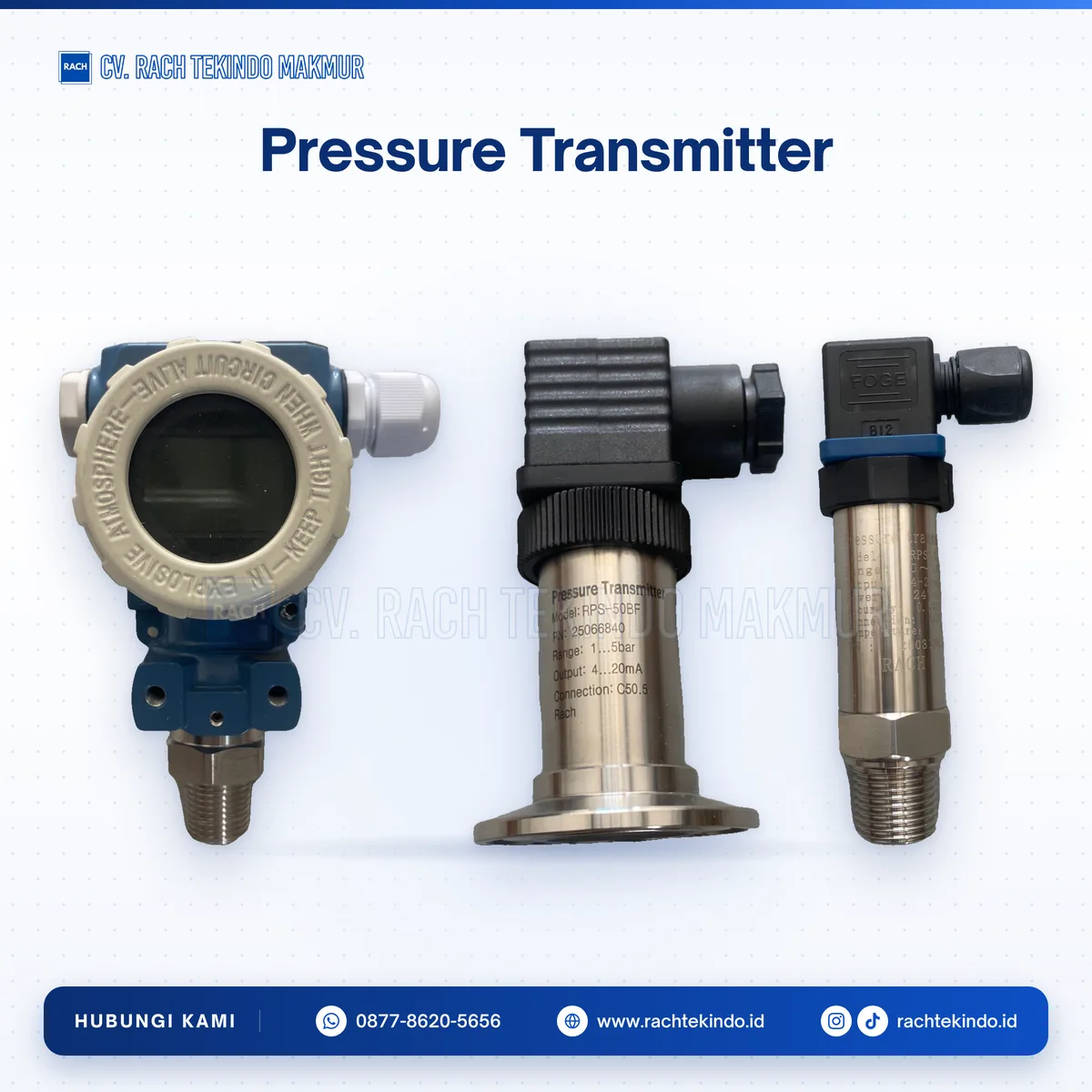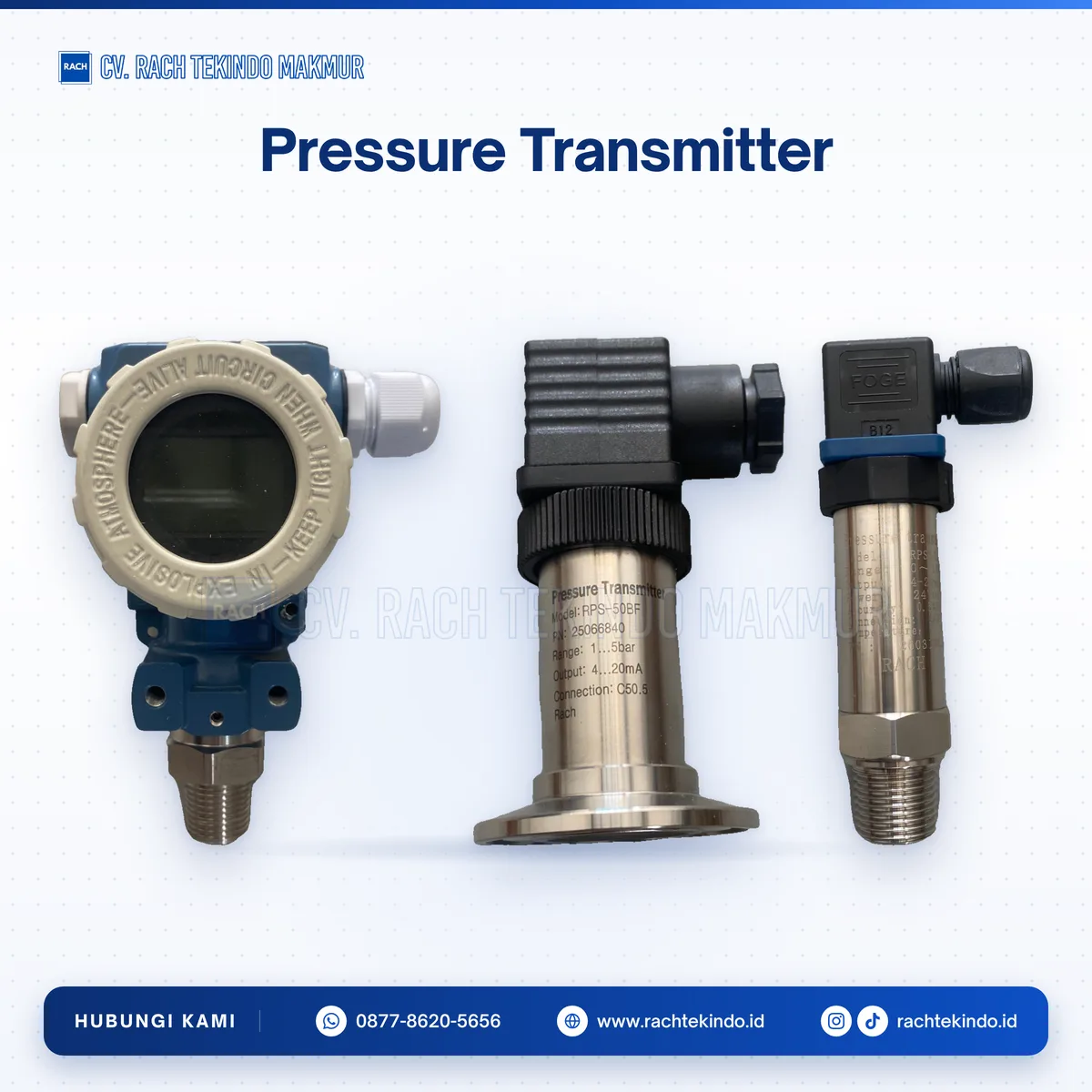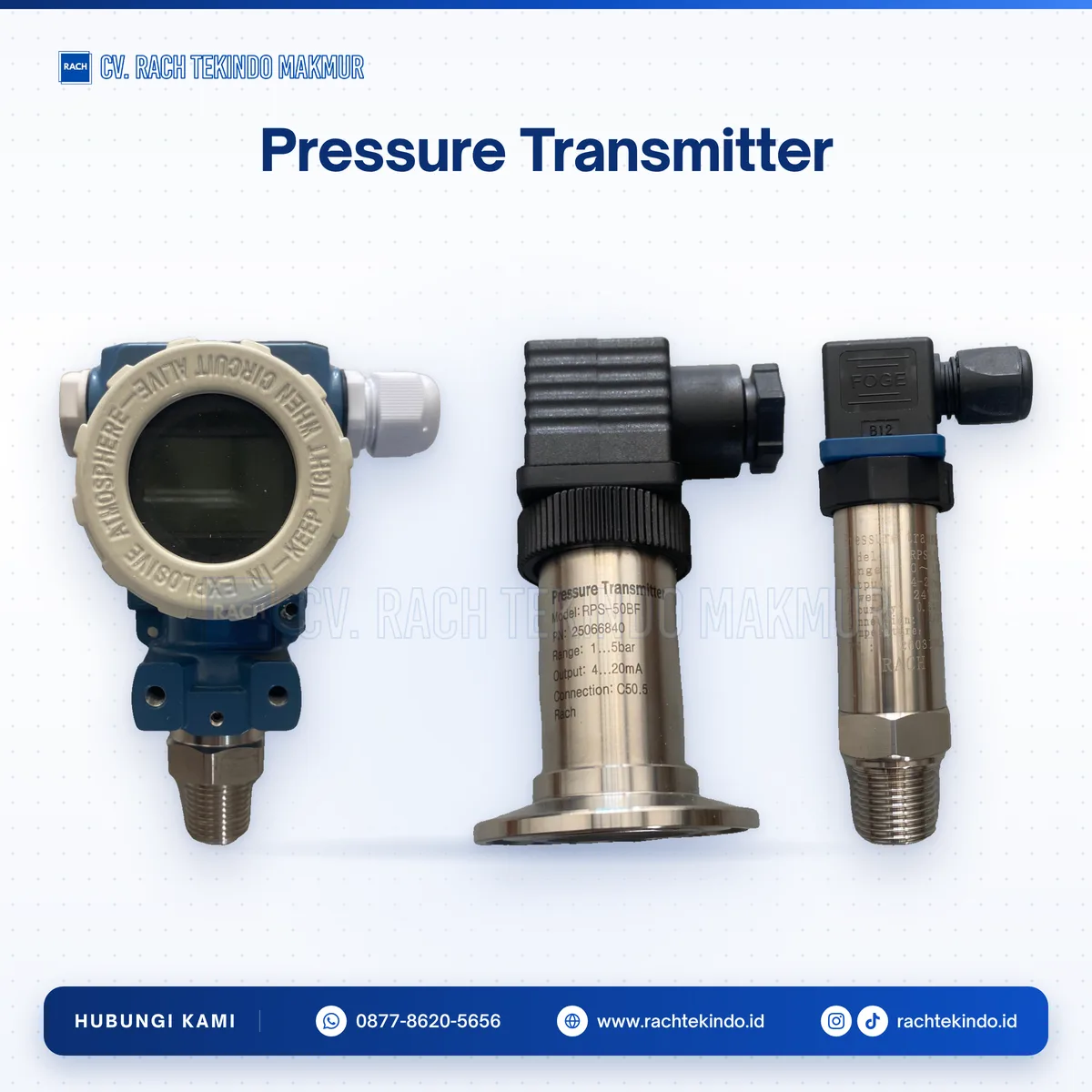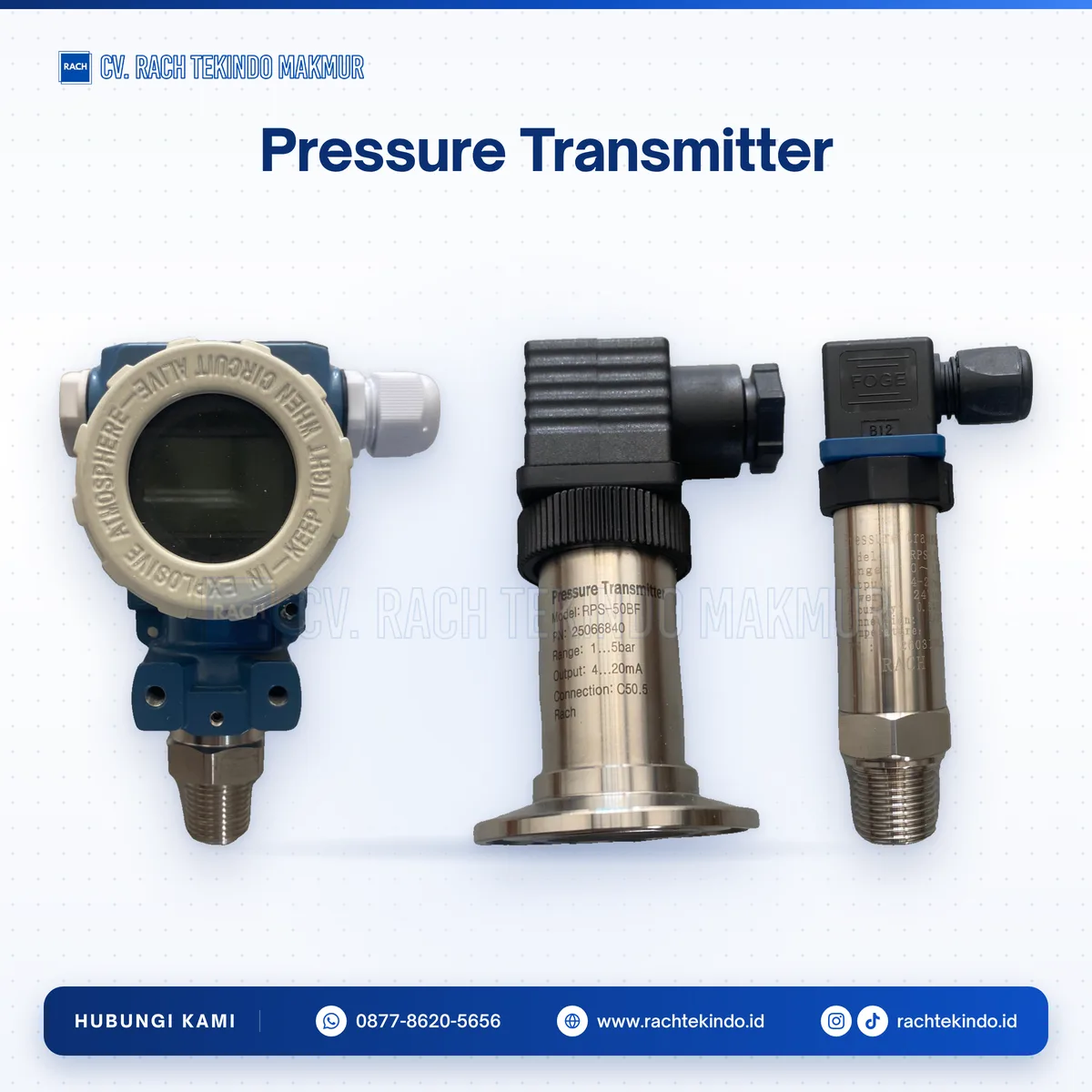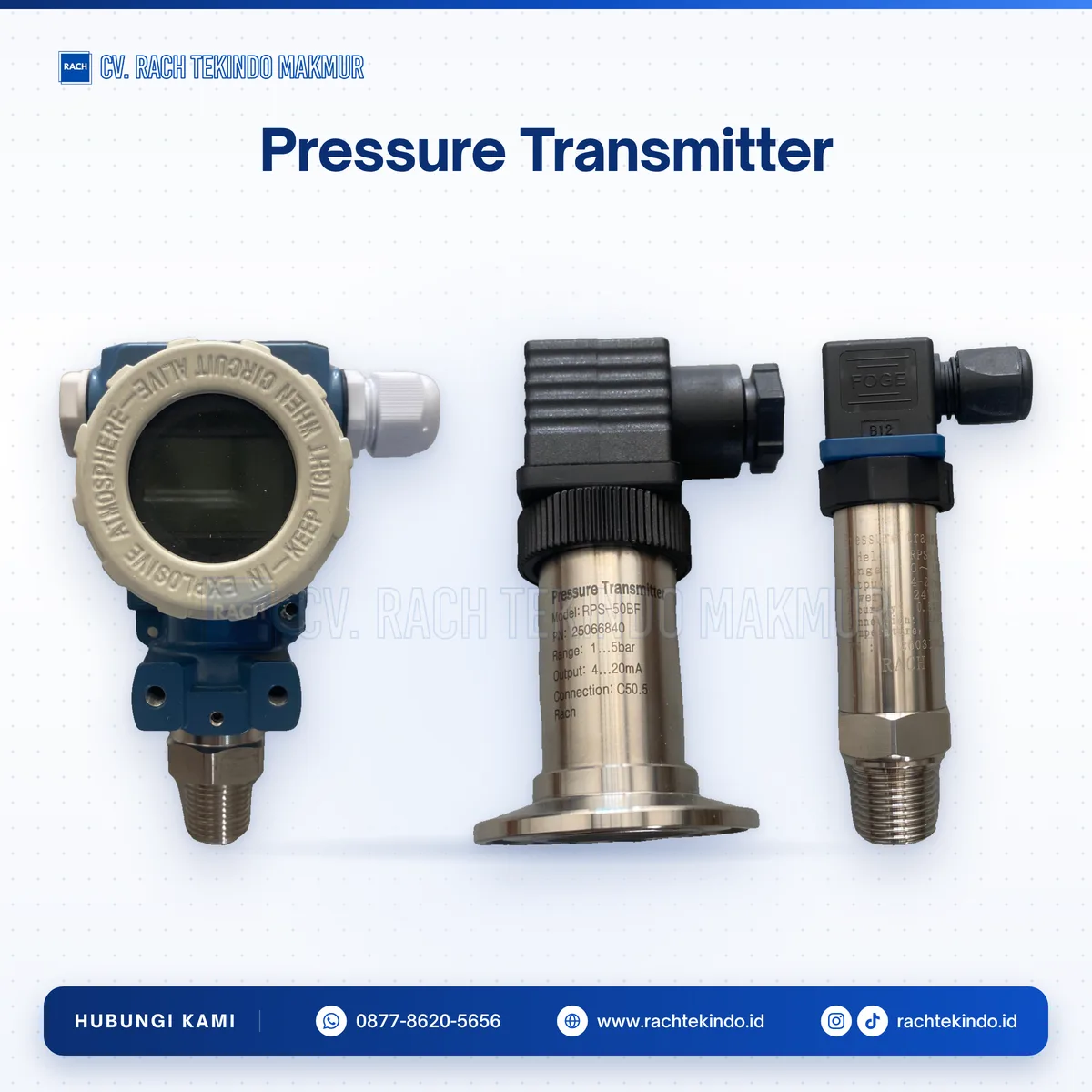
Two pressure transmitters with the same range can show different numbers for the same pressure. Nothing is broken; they are simply using different reference points. Pressure is always measured against something, whether that is the surrounding air, a vacuum, or another point in the process. So the first step in choosing a pressure transmitter is deciding which reference answers the question the operator actually needs answered.
A gauge pressure transmitter measures pressure relative to the atmosphere around it. A small vent hole behind the sensor opens to the outside air, so when the process line is open to atmosphere the transmitter reads 0 bar. This is the most common type, used for pump discharge pressure, compressed air networks, water lines, and hydraulic systems. Gauge models can also be set to a compound range such as −1 to 10 bar for lines that sometimes drop below atmospheric pressure, like a pump suction.
An absolute pressure transmitter measures against a perfect vacuum sealed inside the sensor. Open to air at sea level, it reads about 1.013 bar abs, and that figure drifts with weather and altitude. Absolute transmitters are needed in vacuum processes such as evaporators, vacuum distillation, vacuum dryers, and turbine condensers, because a few millibars of change in outside air pressure is enough to throw off a gauge reading at such low ranges.
A sealed gauge pressure transmitter sits between the two. Its reference is roughly one atmosphere, but the reference chamber is sealed at the factory, so there is no vent hole. At high pressures, say several hundred bar in a hydraulic system, weather-related shifts are negligible compared with the span. The benefit is that moisture has no way in, which makes sealed gauge a good fit for washdown areas, humid locations, or spots that occasionally flood, where an ordinary vent could draw moisture into the electronics.
A differential pressure transmitter, or DP transmitter, has two ports, a high side and a low side, and measures the difference between them rather than either pressure on its own. Typical uses include filter condition monitoring, flow measurement with an orifice plate or venturi, level measurement in pressurized tanks, and room pressure differentials in cleanrooms and HVAC systems. Besides the differential range, check the static pressure rating, the highest line pressure both ports can take, because DP transmitters often sit on high-pressure lines even when the difference they measure is small.
The wrong choice usually shows up only after installation. A gauge transmitter on a vacuum line shows negative values that wander with the weather, while an absolute transmitter on an ordinary pump line forces operators to subtract 1 bar every time they read it. Before ordering, write down the medium, the normal and maximum pressure, and whether you need pressure against outside air, against vacuum, or the difference between two points.
CV. Rach Tekindo Makmur supplies Pressure Transmitters for a wide range of industrial instrumentation needs. If you need pressure transmitters, differential pressure transmitters, or consultation on configuration and installation for your pressure measurement system, contact us on WhatsApp at 0877-8620-5656 to discuss your technical requirements and request a quotation tailored to your application.