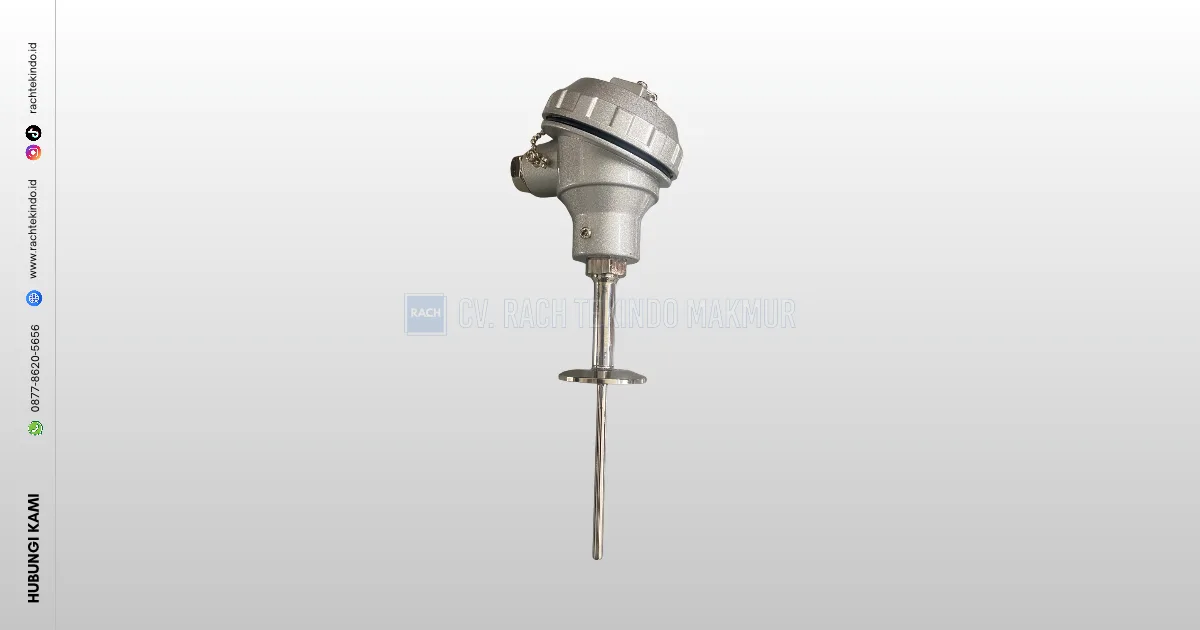
Choosing the right temperature sensor involves more than simply selecting a device that can measure temperature. In industrial applications, the sensor must be suitable for the process conditions, measured medium, operating temperature, installation location, and instrumentation system.
An unsuitable sensor configuration can result in measurements that do not meet the requirements of the process. For this reason, the application should be understood before selecting an RTD Pt100, Type K Thermocouple, Thermistor, or another temperature sensor.
Selecting the Sensor Type Based on the Application
Different temperature sensors have different characteristics. RTD Pt100 is widely used for process temperature measurement and operates through changes in the resistance of its sensing element.
A Type K Thermocouple, on the other hand, uses the thermoelectric principle and is commonly used in various heating applications. A thermistor has specific resistance-temperature characteristics and can be suitable for applications within its appropriate measurement range.
Therefore, there is no single temperature sensor that is automatically suitable for every industrial application. The sensor type should be selected according to the measurement requirements.
Consider the Process Temperature
The required temperature range is an important factor when selecting a sensor. A sensor installed for water temperature measurement in a tank will have different operating requirements from one used in a furnace or high-temperature heating process.
The normal operating temperature should be identified before selecting the sensor so that the sensing element, materials, and configuration are suitable for the actual process.
The maximum process temperature should also be considered, especially in applications where temperature can vary significantly during operation.
Consider the Measured Medium
The medium that comes into contact with the sensor is another important consideration. Measuring the temperature of water, oil, chemicals, gas, steam, or other process media can require different installation and material configurations.
The sensor material and process-contacting components should be compatible with the characteristics of the measured medium. In applications involving corrosive media or specific process conditions, material selection becomes an important part of the temperature sensor configuration.
Temperature Sensor Installation Location
The installation location can also affect sensor selection. Temperature sensors may be installed on pipes, tanks, boilers, heat exchangers, furnaces, machines, and other process equipment.
For pipeline applications, for example, the sensor should be installed at a suitable point where it can represent the process temperature effectively. In tanks or vessels, the sensor length and measurement position should match the equipment design and required measurement point.
The installation method may also vary depending on the equipment and process requirements. Therefore, the installation point should be considered when determining the sensor configuration.
When the Sensor Is Connected to a Temperature Transmitter
For monitoring systems integrated with PLC, DCS, or SCADA, a temperature sensor can be combined with a Temperature Transmitter.
The transmitter receives the sensor signal and converts it into a standardized output such as 4–20 mA. This allows the temperature signal to be transmitted to a control panel or control room through the instrumentation system.
The transmitter input must also match the selected sensor. An RTD Pt100 input, for example, is different from a Type K Thermocouple input. The measurement range and output signal should also be compatible with the available control system.
Selecting a Temperature Sensor for the Complete System
Ultimately, temperature sensor selection should consider the complete measurement system rather than the sensor alone. Process conditions, temperature range, measured medium, installation location, installation method, and control requirements should be considered together.
With the right configuration, a temperature sensor can provide the temperature information required for process monitoring and control.
CV. Rach Tekindo Makmur provides Temperature Sensors & Temperature Transmitters for temperature measurement in various industrial applications. If you need sensors for pipes, tanks, boilers, heat exchangers, furnaces, or production machinery, contact us via WhatsApp at +62 877-8620-5656 to discuss your technical requirements and request a quotation based on the required configuration.