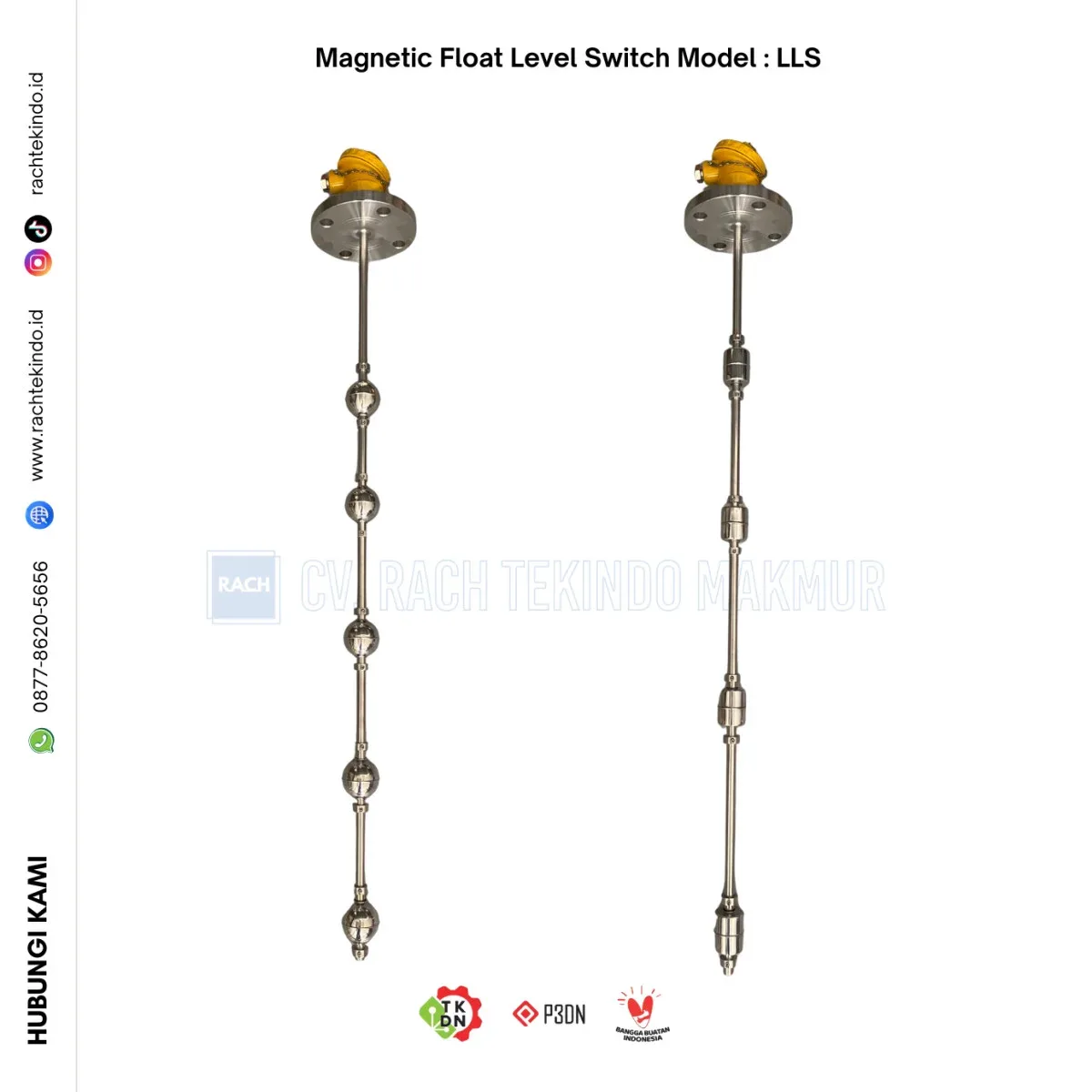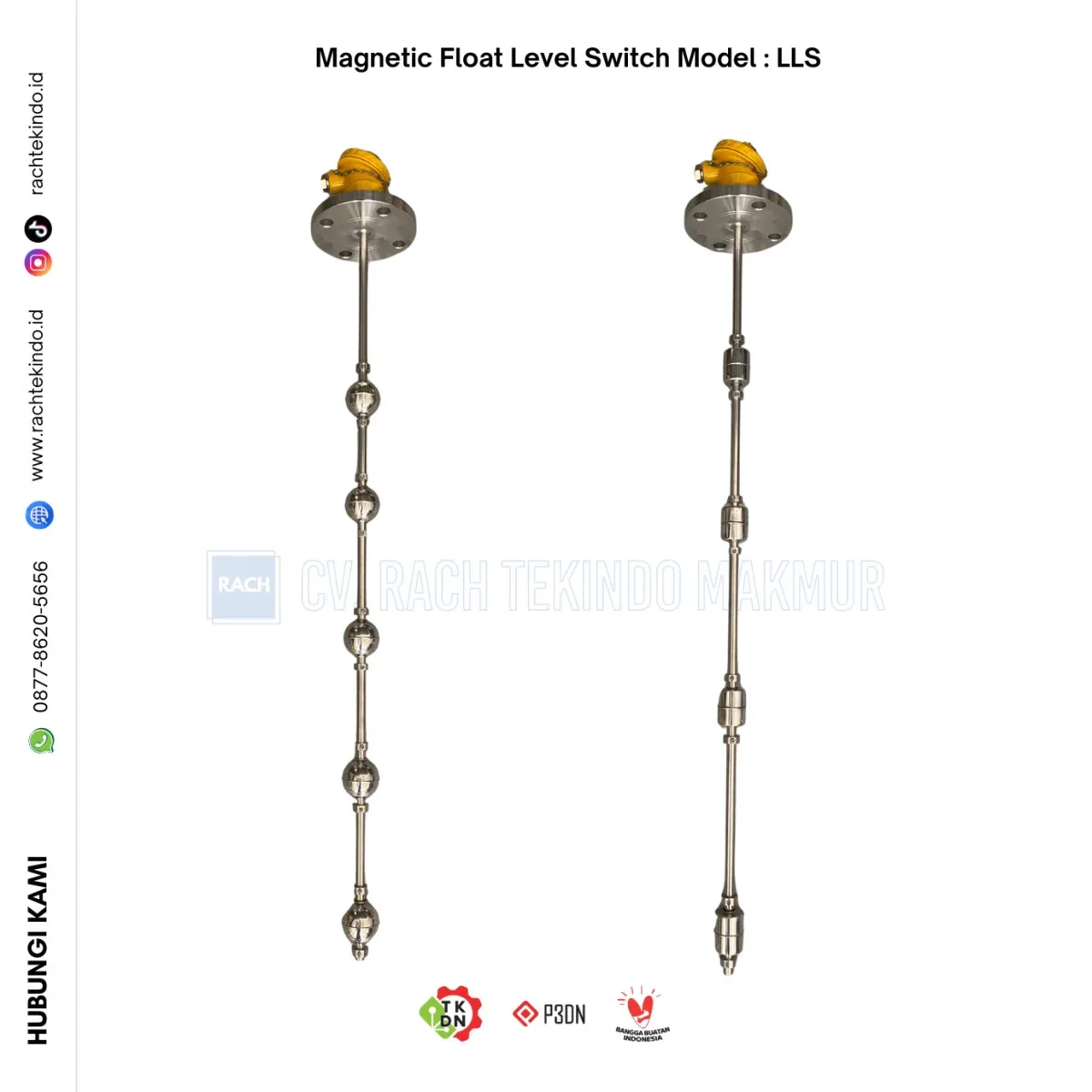
Magnetic Float Level Switch LLS for Tank and Pump Control
By Admin
Read more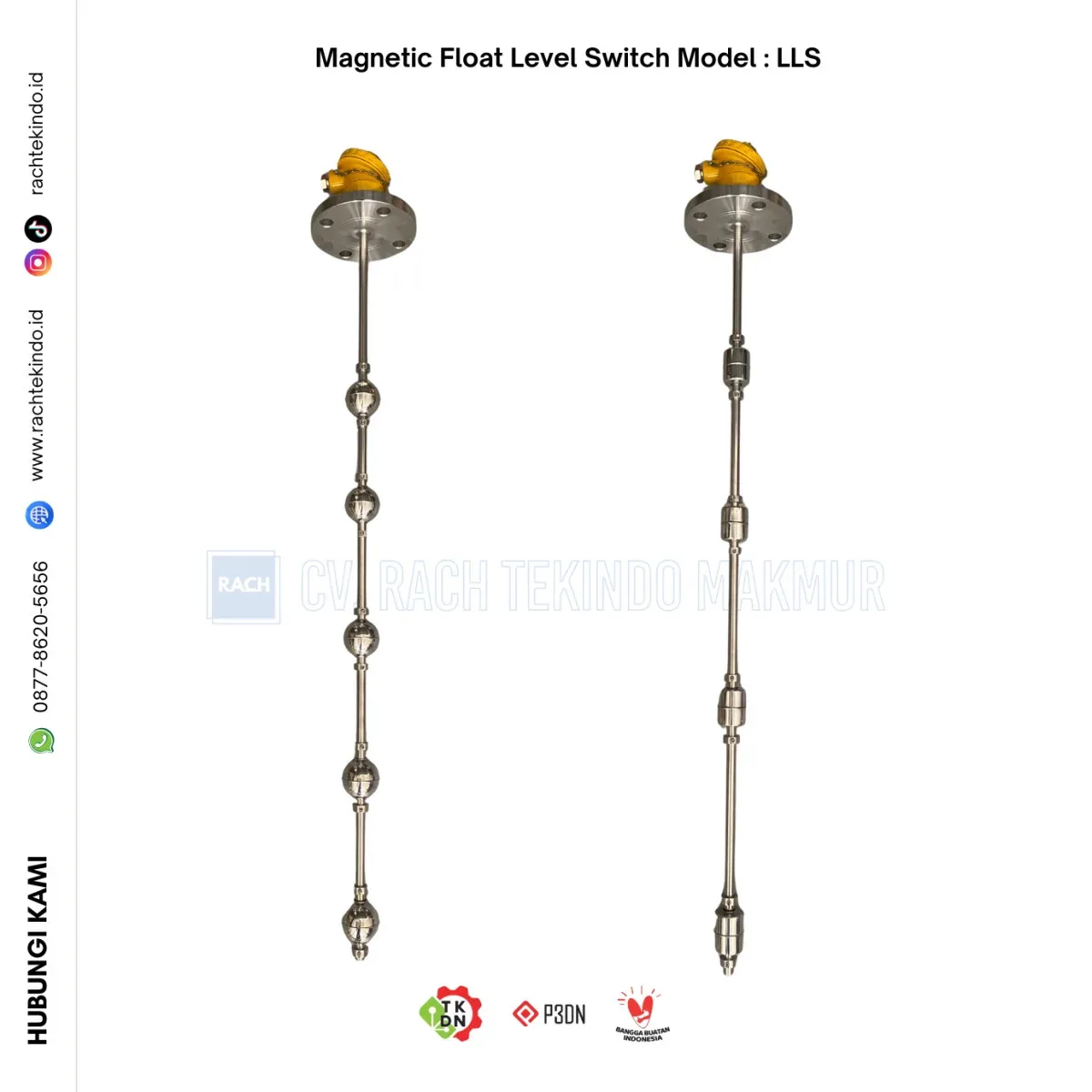
Selecting an industrial level switch starts with understanding the process it will monitor. Two tanks with similar dimensions may require different instrument configurations because their liquids, temperatures, pressures, and control functions differ. The Magnetic Float Level Switch Model LLS should therefore be specified using application data rather than the model name alone.
The first consideration is the process liquid. Available material options include stainless steel 304 and stainless steel 316L, depending on the product configuration. Material selection should account for chemical compatibility at the actual operating temperature and concentration. A stainless steel construction does not make an instrument suitable for every chemical or every process condition.
Liquid density is equally relevant because the detection mechanism relies on buoyancy. The supplied LLS product information lists a media density range of 0.5 to 1.0 g/cm³. The float size and configuration need to be matched to the actual liquid density. Applications outside the stated range require confirmation before an instrument is ordered.
Temperature and pressure limits must be reviewed together with the selected construction. The LLS information describes a standard version rated up to 120°C and a high temperature option up to 200°C, with a listed maximum pressure of 16 barg. These values should be checked against the documentation for the ordered variant. Maximum temperature and maximum pressure should not be assumed to apply simultaneously to every configuration.
The required number of switching points depends on the intended control function. One point may be sufficient for a limit alarm, while several points can support different operating states. With options for up to eight detection points, the Model LLS can be configured for multi point applications. Each switching position should be specified using clear dimensions and an agreed mounting reference.
Mechanical connections must match the tank nozzle or opening. Listed options include threaded connections, flanges, and blind ferrules, with flange choices available under the specified standards. A nominal connection size alone is not enough to define compatibility. The connection dimensions, pressure class, insertion length, and clearance needed to install the float should also be confirmed.
The electrical interface requires similar attention. SPST and SPDT outputs are available, and the supplied information lists contact ratings of 1 A, 230 VAC/DC, and 40 VA. These values need to be interpreted against the switching limits in the relevant datasheet. Maximum current and maximum voltage should not be assumed to be simultaneously permissible. Load characteristics and the possible need for an interposing relay should be reviewed during panel design.
The aluminium IP65 housing and the optional explosion proof version address different requirements. Environmental protection should not be treated as confirmation that an instrument is suitable for a hazardous area. Where an ATEX version is required, the certificate and equipment marking should be checked against the installation requirements. The certification option should not be assumed to cover every LLS variant.
For Indonesian projects that require TKDN documentation, the relevant product certificate should form part of the procurement review. The certificate number, stated local content value, and covered model need to match the project requirements. Reviewing this information early helps define a clearer technical and commercial enquiry.
Before requesting a quotation from Rach Tekindo, prepare the liquid type, density, operating temperature, pressure, connection details, and required switching positions. These details provide a practical basis for discussing the Magnetic Float Level Switch Model LLS and selecting a configuration that matches the installation.
This article has been viewed 1 times.