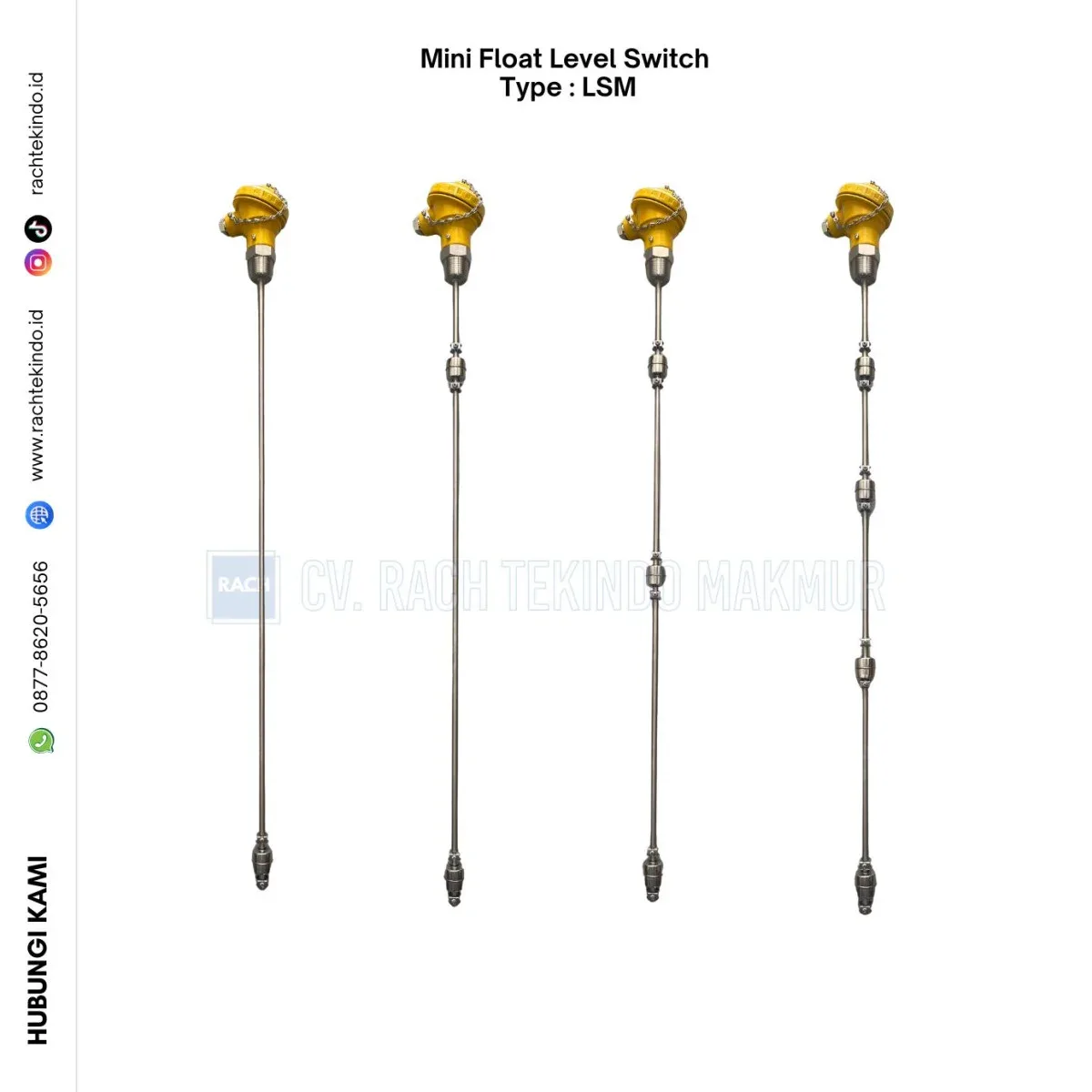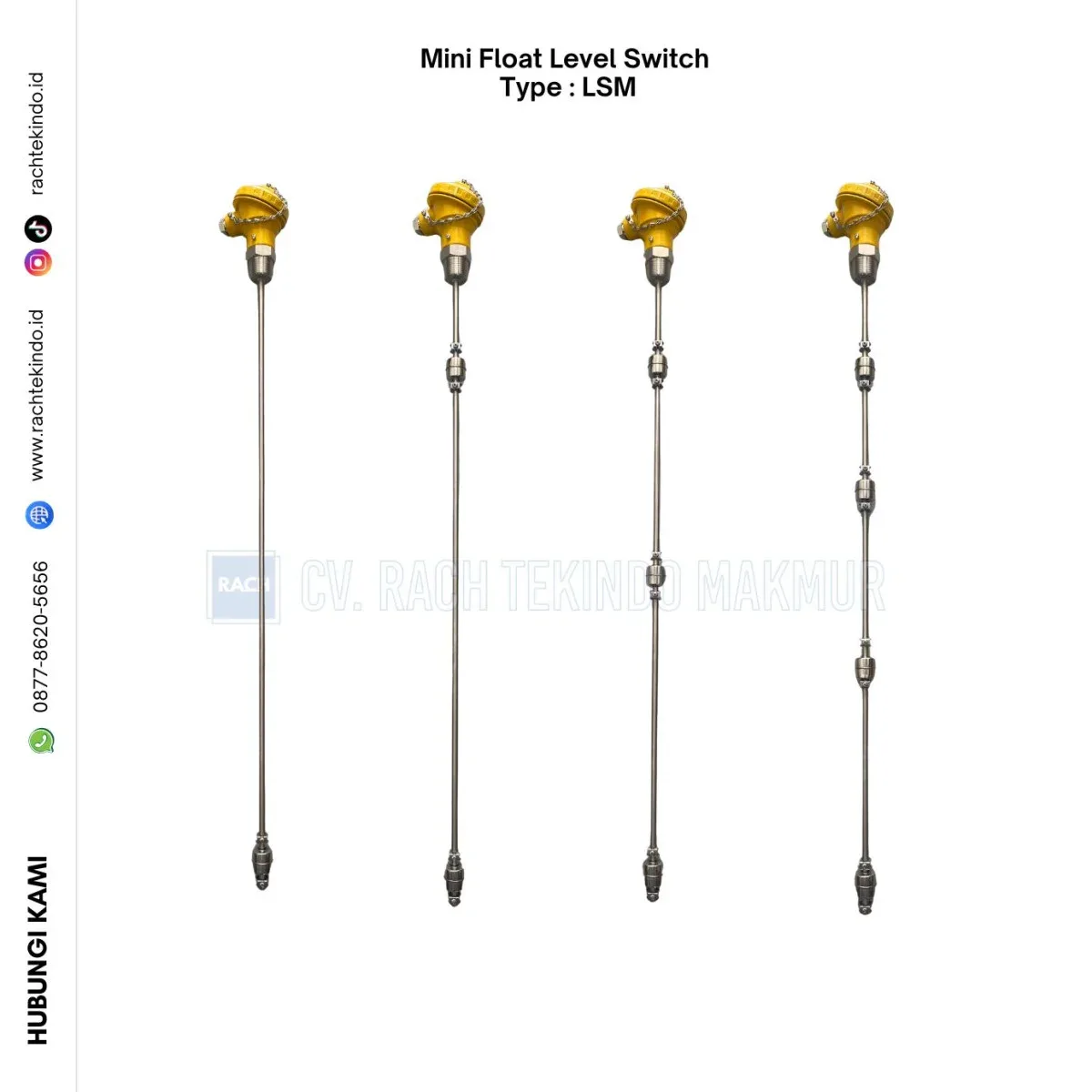
Mini Float Level Switch LSM Applications for Level Alarms and Tank Control
By Admin
Read more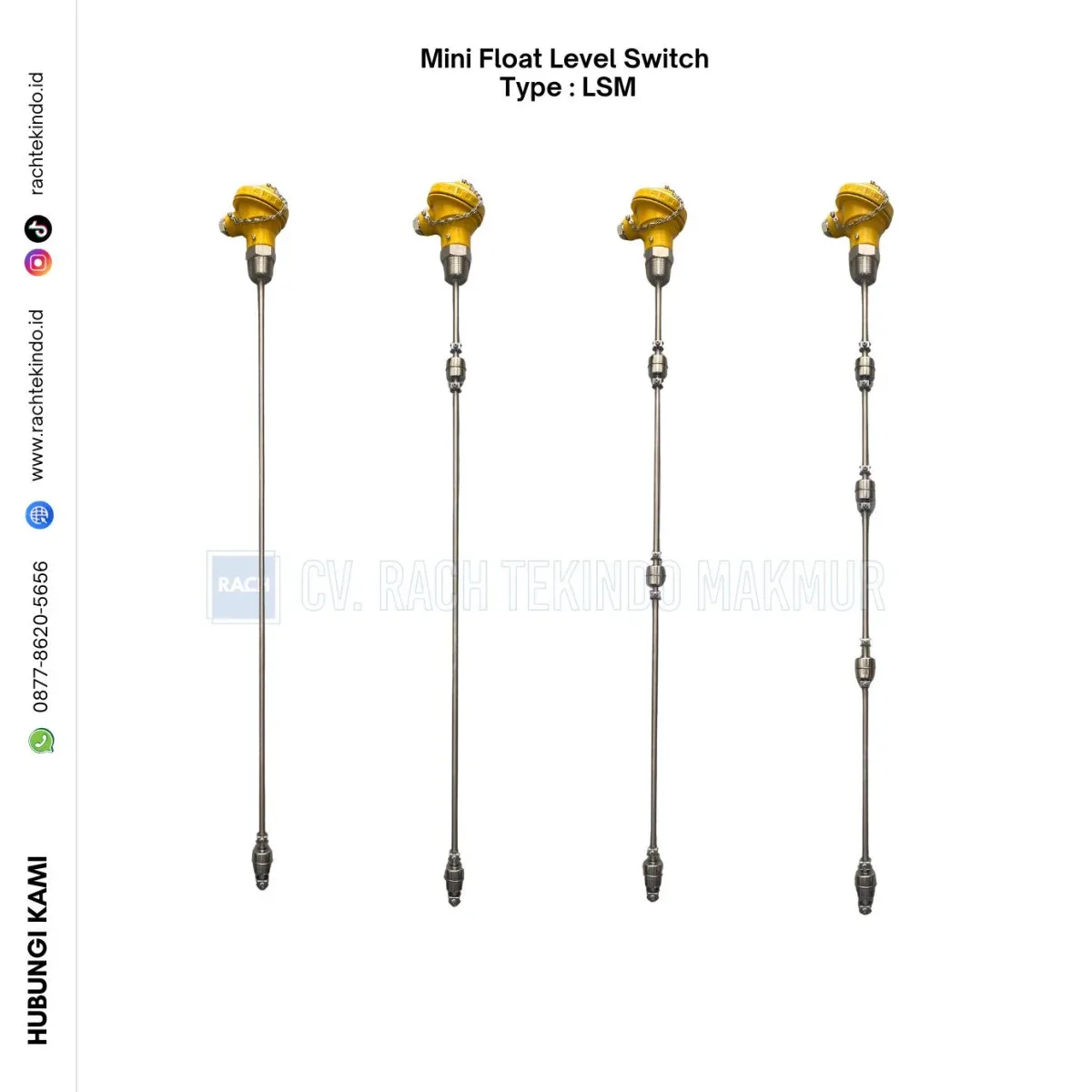
The Mini Float Level Switch LSM is an option for liquid level detection where installation space is limited. However, compact dimensions alone do not determine whether an instrument suits an application. Selection should also account for the liquid, operating conditions, process connection, and the required switching function.
Start by defining the intended purpose. A low level alarm may require a different detection position from a switch used to stop filling. Describing the required response helps establish the switching location and mounting orientation. This keeps the selection process focused on what the instrument must do in the actual installation.
The liquid type should be included from the outset. The Mini Float Level Switch Type LSM is offered for media such as water, oil, and chemical liquids compatible with its construction. Stainless steel 304 or stainless steel 316L should be selected according to the actual service conditions. Food and beverage or pharmaceutical applications also require a specific review of hygiene requirements and material documentation; stainless steel alone does not establish compliance with every process requirement.
The LSM specifications list a liquid density of 0.8 g/cm³. This value should be clarified during the technical review, including whether it is a reference value or a minimum requirement for the offered float configuration. Providing the liquid density at operating temperature is more useful than relying only on a general description such as water or oil.
The listed maximum temperature is 120°C, while the supplied product data states a maximum pressure of 10 kg/cm². Both normal operating conditions and possible maximum conditions should be communicated. The pressure unit convention and limits applicable to the selected configuration should be confirmed through the datasheet or technical review before being used as design inputs.
Physical dimensions need to be checked against the tank arrangement. The LSM specifications identify an 8 mm tube diameter and a 28 mm float size. The tank opening must allow installation, and the float needs clearance during operation. Insertion length and the detection position should be specified using a drawing or dimensions with a clear reference point.
Top mounting and side mounting options provide flexibility for different tank access arrangements. Available process connections include a standard 1 inch thread, with optional flange and blind ferrule connections. The thread type should be confirmed to ensure compatibility with the mating connection. For flanged installations, the required size and standard should be stated in the quotation request.
The electrical output is SPST, with listed contact ratings of 1 A, 230 VAC/DC, and 40 VA. These figures must be interpreted together with the switching limits in the product documentation. Maximum current and maximum voltage should not automatically be assumed to apply simultaneously. Load characteristics and any need for an interposing device should be addressed in the control circuit design.
The standard housing is aluminium with IP65 protection, while an ATEX Explosion Proof IP68 option is available according to configuration. Hazardous area requirements need specific review because an IP68 rating does not itself establish explosion protection suitability. The certificate, equipment marking, and permitted conditions of use must match the installation requirements.
A Mini Float Level Switch LSM price enquiry should be based on a defined configuration. Material, insertion length, process connection, and housing options can influence the quotation. Comparing equivalent specifications makes it easier to assess both technical suitability and procurement cost.
CV. Rach Tekindo Makmur supplies the Mini Float Level Switch Type LSM and other instruments for industrial process applications. For product information and a quotation, contact the team via WhatsApp at +62 818-0809-2000 with the liquid type, temperature, pressure, connection details, and intended function. These details help establish the required configuration from the beginning.
This article has been viewed 1 times.